Your Hobby Doesn't Need a Business Plan
I have a friend who took up pottery last spring. Within about ten days she had a website, a logo, and a spreadsheet tracking her "studio hours." By June she had stopped going. The wheel is still in her garage, under a tarp, next to a box of unopened glaze.
I think about that tarp a lot. Not because she failed — because the thing never got a chance. It was recruited into the productivity economy before it had time to be fun.
How the Hobby Got a Job
Hobbies used to be a slightly embarrassing part of life, like a stamp collection or a garage band. Nobody expected them to justify themselves. Then the language shifted. Hobbies became skill-building. Free time became time blocks. A Saturday afternoon throwing pots turned into "developing a secondary income stream," and suddenly the stakes were back, and so was the deadline, and so was the part of your brain that keeps score.
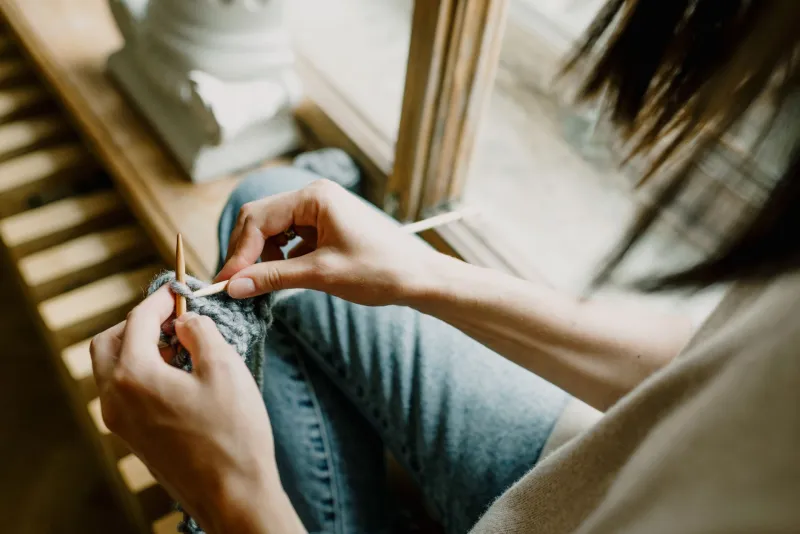
Look at how we talk now. Someone mentions they play guitar and the first question is whether they gig. Someone says they run and we assume a race is coming. Someone learns to bake bread and within a month they're being gently encouraged to sell it at the farmers market. We have effectively decided that leisure is only legitimate if it can be converted into something.
Your Brain Doesn't Need Another Project
Here's what gets lost in that conversion. The reason unstructured, low-expectation activity feels good isn't a mystery or a luxury — it's that it recruits a different mode of attention than work does.
Workbrain is narrow. It has a target, a checklist, a standard to hit, and a running evaluation of how close you are. It's useful and it's expensive. Run it all day and you're tired in a specific, hollow way that a nap doesn't fix.
Doing something useless — badly, on purpose, with no audience — runs a completely different operating system. There's no output to optimize, so the evaluating part of your mind goes quiet. Attention opens up. Errors stop being threats and start being funny. This is the state where people report that their actual work problems suddenly seem to resolve themselves in the shower.
And no, it doesn't work if you turn the useless thing into a goal in disguise. "I will learn to paint to improve my creativity for work" is not a hobby. That's a professional development seminar with a wet brush.
What the Research Keeps Pointing At
Studies on leisure consistently find that the psychological benefit is tied more to choice and absence of obligation than to the activity itself. The same research typically distinguishes between serious leisure (high commitment, skill ladder, identity) and casual leisure (low stakes, absorbing, done for its own sake). Both have value. Only one of them can be ruined by a spreadsheet.
There's also a well-worn finding about play and adult cognition: novelty, mild challenge, and permission to be incompetent tend to be good for flexibility and mood. The operative word is permission. A beginner ceramics class is restorative. A beginner ceramics class you've decided will determine whether you have a creative side is not.
The Useless Hour, Ground Rules
If the tarp in your garage has a twin in your life, here's a low-drama way back in. Pick one hour a week. Protect it like a dentist appointment. Then attach three rules.
Rule one: no output. Nothing you make gets photographed, posted, sold, or shown to anyone who might have an opinion. If you play an instrument, you're allowed to sound terrible for the entire hour. This is the point, not a phase on the way to something better.
Rule two: no metrics. No tracking apps, no streaks, no "day 12 of 30." The moment there's a number, there's a way to be behind on the number.
Rule three: quit cheaply. If you hate it after three sessions, drop it. Useless things don't get sunk-cost loyalty. The hour was never an investment, so there's nothing to protect.
The Permission Slip Nobody Hands You
I'll say the quiet part plainly: you are going to be bad at this, and you may never get good, and that is a feature. Most of the things we do all day are graded in some way — by a boss, a client, a comment section, or the small brutal auditor in your head. A hobby is one of the few remaining rooms where the door closes and the grading stops.
My friend eventually pulled the tarp off. She goes on Thursday nights now, doesn't photograph anything, and makes what she cheerfully describes as "lumpy little guys" that her kids fight over. No website. No spreadsheet. Nothing to show for it but a slightly better week.
That's not a wasted hour. That's the only kind of hour that pays you back with nothing attached.