Drowning in Advice: How Too Much Wellness Information Is Making You Worse at Decisions
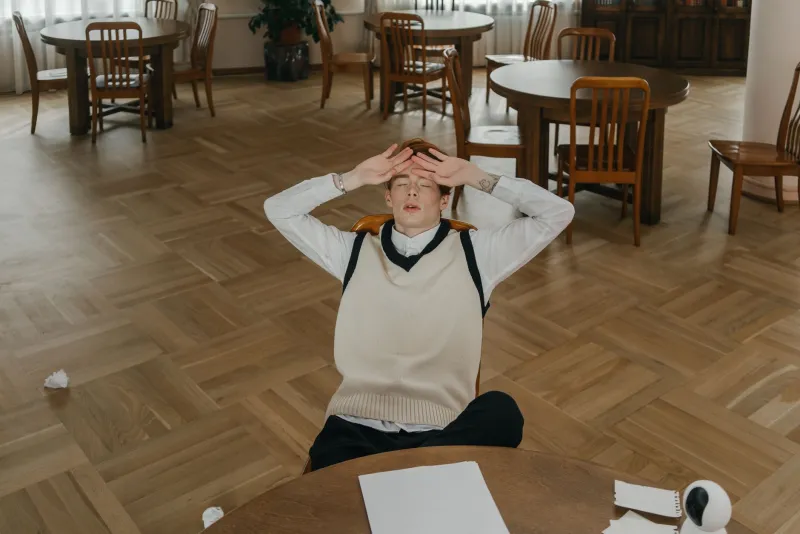
Picture your average Tuesday morning. Before you've even finished your first cup of coffee, you've already skimmed three newsletter headlines about sleep optimization, watched a 90-second reel on cortisol management, and bookmarked an article promising a five-step framework for peak cognitive performance. By 9 a.m., you're fully informed — and somehow completely paralyzed.
Welcome to what researchers call information overload, and it's not a personal failing. It's a neurological one.
Your Brain Has a Bandwidth Problem
Here's something the wellness industry rarely advertises: the human brain's prefrontal cortex — the region responsible for weighing options, making decisions, and planning ahead — has a hard limit on how much it can process at once. Neuroscientists refer to this as cognitive load, and when it gets maxed out, something counterintuitive happens. Instead of making better decisions with more information, you start making worse ones. Or you stop deciding altogether.
A landmark study by psychologists Sheena Iyengar and Mark Lepper — the famous "jam experiment" — demonstrated this decades ago. Shoppers presented with 24 varieties of jam were far less likely to actually buy anything than those shown just six options. More choice didn't feel like freedom. It felt like a trap.
Now scale that up to the modern wellness landscape, where you're not choosing between 24 jams but between hundreds of competing frameworks for how to live your best life. Intermittent fasting or intuitive eating? Cold plunges or restorative yoga? Stoicism or somatic therapy? Every option comes with compelling evidence, passionate advocates, and a podcast episode explaining why everything else is wrong.
Your brain, bless it, is doing its absolute best. But it was never designed for this.
The Paradox Nobody Talks About
The cruelest irony of the self-improvement era is this: the more you want to get it right, the more information you seek — and the more information you consume, the harder "getting it right" actually becomes.
This isn't just philosophical. Neurologically, every new piece of competing information activates what's called a conflict monitoring response in the anterior cingulate cortex. Your brain registers the contradiction between "cold exposure boosts dopamine" and "rest is the foundation of everything" as a genuine cognitive conflict. It flags both as important. It starts trying to reconcile them. And while it's doing that, your ability to act on either diminishes.
Add to that the emotional weight of wellness content — which frequently implies that your current habits are quietly destroying you — and you've got a system running high on anxiety and low on clarity. Stress hormones narrow your attentional focus and reduce your capacity for nuanced thinking. You end up more reactive, less reflective, and increasingly stuck.
When Optimization Becomes Its Own Problem
There's a particular flavor of this paralysis that hits high achievers especially hard. If you're someone who genuinely cares about doing things well — at work, in relationships, with your health — the abundance of optimization strategies doesn't feel like noise. It feels like opportunity you can't afford to miss.
So you keep consuming. You build elaborate morning routines assembled from seventeen different sources. You track six biometrics simultaneously. You read the book, then the counter-argument to the book, then the nuanced synthesis of both. And somewhere in all that effort, the original goal — feeling better, thinking more clearly, living more intentionally — quietly gets buried under the weight of the pursuit itself.
This is the clarity paradox in full effect: the harder you chase insight, the further it retreats.
What Your Brain Actually Needs to Decide Well
The research on good decision-making points toward something that feels almost radical in today's content environment: less input, more space.
Studies on what's called "unconscious thought theory" suggest that for complex decisions, periods of mental rest — where you're not actively processing information — actually produce better outcomes than deliberate analysis. Your brain needs time to consolidate, compare, and quietly prioritize without being fed new data every twenty minutes.
Practically speaking, this means a few things worth trying:
Cut your sources, not just your screen time. It's not enough to scroll less if you're still subscribing to twelve wellness newsletters. Pick two or three voices you genuinely trust and give yourself permission to ignore the rest. Curation is a cognitive act of self-care.
Introduce a "settling period" before adopting new frameworks. When you encounter a compelling new approach — a new breathing technique, a new productivity system, a new dietary philosophy — try sitting with it for two weeks before adding it to your routine or researching it further. Let your existing experience weigh in.
Ask a different question. Instead of "what does the research say is best?" try "what has actually worked for me before?" Your own lived data is real data. It's personalized in a way no study can be.
Treat confusion as a signal, not a starting point. When you notice yourself feeling overwhelmed by competing information, that's your nervous system telling you to stop adding input — not to find better input. The answer to too much noise is rarely more noise.
Finding Your Own Signal
Here's the reframe that might actually help: clarity isn't something you acquire by gathering enough information. It's something you uncover by removing what's obscuring it.
Your brain already has preferences, patterns, and a decent working model of what makes you feel good versus depleted. That internal signal exists. But it gets drowned out when you're constantly importing external frameworks that may have nothing to do with your specific neurology, lifestyle, or goals.
Mindfulness practices — even brief ones — are useful here not because they're trendy, but because they train your attention toward internal experience rather than external input. A five-minute body scan before you open your phone in the morning isn't going to optimize your mitochondria. But it might help you notice that you actually slept fine, you're not anxious, and you don't need to fix anything today.
That noticing? That's clarity. And it was available to you the whole time — just buried under the advice.
The Simpler Version
You don't need more frameworks. You need fewer, better ones. You don't need to know everything about your brain. You need to understand a handful of things about your brain.
The goal of consuming health and wellness content should never be to consume more of it. It should be to need less of it — because you've built enough self-knowledge to trust your own judgment.
That's not a limitation. That's the whole point.